Showing posts with label Nonfiction. Show all posts

06 November 2014

A Story Holy and Haunting (Nonfiction)


Last night was my first dream within a dream. At least the first on record. I’ve been wanting to have one for a few years now. (Inception was released July 2010.)

* * *

I witnessed the most fantastic and wonderful story.

The sort of tale that transforms the onlooker—any onlooker.

This story, I knew, if written down, would have the power to change a reader into the sort of hero he was reading about. This story—this treasure—played out before my eyes. The story of stories. With mighty heroes and merciless villainy, with landscapes broad as the clouds of heaven and deep as the chasms of hell.

A story holy and haunting, savage and sacred.

But my guide, with burning wings, told me I could not take the story with me in my return to wakefulness. And when he said it, I was stricken not with grief, but with panic, gripping to the story, this treasure, as tightly as I could.

I suddenly woke.

And found the book was no longer in my hands.

But I had a memory of the book, particularly its cover, a worn leather with frayed edges, and a specific symbol imprinted into the center. This image of the book, still gripped by my mind, was the story’s container, like a chest full of gold, the thing which, if turned open, would reveal the wonder and magic that I had left behind.

I grabbed a pen and scribbled as quickly as I could, as the image of the cover decayed from mind, me desperately trying to recreate the magic before it vanished. And as I did, a thought struck me, one I knew to be true: If I could create an accurate likeness of the book, one I could heft in my hands, then I could open that mockery and find at least the echoes of the wonder I had seen in my dream. I would have the power to open it and read. So I drew more furiously, penning the details as they floated away.

I could only conjecture about the forgotten story’s magnificence. I no longer recalled the glory of the thing I now wanted—the thing I longed for. But I wanted it badly, that lost knowledge, whatever it was—wanted it more than anything.

And that, my friend, was when I woke up again.

And I could no longer remember even the symbol etched into that mystical leather cover.

* * *


18 August 2014

At the Bottom of Nearly Everything (Prose Poetry)


Being an author lets you take wild risks: If you’re successful, you win. If you’re not successful, you write an awesome story about it. Still win.
Boom. I’m lucky like that. 
This piece I’m sharing with you is a failed success. Or successful failure. Something like that. I’m sharing because I believe some of my best writing comes from my worst moments. Maybe we’re most human when life is tough. It’s prose poetry (which means drink it slowly). And thank you, Christopher Nolan, for inspiring the non-linear plot. Lastly, don’t worry: I’m okay. I’m happy. Sad and happy.
Hope you enjoy it. : )


It’s night.

The crickets are whistling.

I’m lying on my back in a parking lot. A vast, empty parking lot. The same parking lot, in fact, that I walked blind across in my essay “On Understanding.” Flat on my back, spread eagle, like the Vitruvian man but with clothes.

I haven’t had a crush like this in awhile. Although it’s usually the smile that gets me, with her it was her laugh.

I see headlights below my jaw. I jerk my head up to check their trajectory—don’t kill me! Not an ideal way to go—lying down in a dark, empty parking lot. Tires are especially scary from this angle.

Before the call, I had some interest in several girls. After, though, I’ve somehow narrowed my options down to zero.

I put my shoulder blades and skull back on the blacktop. Okay, kill me.

From this perspective the sky is almost all I see. A vast dark blue, full of stars. The cool thing is that if I tilt my head back, I finally get the perspective of the world as it really is. The stars are below, then me, then the earth at my back. I’m at the bottom of nearly everything.

I haven’t asked any girl in the ward on two dates—I haven’t chosen a particular interest. In other words, this has nothing to do with my actions. But these individuals, yes, more than one, got first dibs on me, so I’m out of the game. I don’t even know who.

Trees hang down in a giant circle around me. Luckily gravity holds my spine to the earth so I don’t fall into outer space. Or not so luckily. I have an inkling to tell him to let go: Okay, gravity, that’s enough. I’m done here. You’ve been awesome.

Two days ago at the pool, I finally got the guts to ask out Mallory. Yes, finally.

But tonight when I called her, she’d changed her mind, declining my offer because she didn’t want to cause conflict with certain other unnamed individuals who she knows are interested in me. It was awful—she was so nice about it. To smooth things out, she added that we’re probably not compatible anyway, meaning, I think, that I’m a scholar and she’s a skater. I can learn. That’s what I wanted to say.

The cars whiz past on three distant sides. They’re all upside down. Everyone but me. The tires stick to the bottom of the giant sphere. Headlights point ahead into the darkness.

It’s amazing how big the earth is. And the sky beneath. Then there’s little old me.

I really want to find her—my future wife.

Really.

Just like I want to reach down and touch one of those stars.

11 February 2014

How to Look Like an Idiot with Dignity


“I’m just trying to get through life without looking stupid. It’s not going too well.” — Brian Regan

This story’s about me looking like an idiot.

One instance, anyway. But there are many.

I was working my way through a master’s program, and this was my first semester teaching freshman English. One of our best days was when we did a rhetorical analysis of Leonard Cohen’s “Hallelujah.” The students loved it. And so did I.

08 January 2013

My Washington D.C. Adventure, in Six Parts

(This essay was a Christmas present to Mom and Dad. Now I’m passing it along to the world, but I realize it might take more than a true friend to read an essay this long.)


(The paragraphs set in Courier were posted to my social networks during the trip. They were fun poems, but, as poetry goes, they needed an essay to demystify them...)

DC, Day 1: Found the triforce at DCA, stole the declaration of independence, uncovered the lost symbol, watched Dr. No vote yes twice. 
I had come 2,489 miles for this. And I was expecting it to be the big moment. It was the end—my telos, my grail, my Land of Song.

But something was wrong.

23 August 2012

The Silence Amplifies the Light


The other day in Ed Week class, Bentley and I were sitting at the top of the De Jong Concert Hall against the back wall where the ceiling casts shadows. I was telling him what I’d learned about nothingness:

When there’s no light, you have darkness, which is nothingness. When you have no sound, you have silence, which is nothingness. When you have no thing, you have space, which is nothingness. (I got these zen ideas from reading The Power of Now.)

Usually light is considered good (a something), yet silence is considered good too (a nothing). This seemed odd to me. Which is better, something or nothing? I concluded that you need a proper balance: When you’re trying to think and visualize—that is, when you’re trying to see—it’s nice to have silence: the silence amplifies the light. And when you’re trying to listen carefully, it’s nice to close your eyes: the darkness amplifies the sound. Somethingness (I like that word) competes with other somethingness, so we need nothingness to balance it out.

They say light is good and darkness is bad, but when you have pure light, you can’t see anything. It’s the shadows (the nothingness) that lets us perceive form. If there’s no shadow, all you’ll see is white, and that means seeing nothing.

Wow. Interesting. Pure something is nothing. And pure nothing is nothing. It’s only the combination of nothingness and somethingness that creates form.

As I was saying, I was telling this to Bentley, and I said, “The silence amplifies the light.” And he said, “Whoa, that’s deep.” I hadn’t realized I’d said something poetic, but after he pointed it out, I wrote it down, and now I’m handing it to you.

09 August 2012

On the Demise of the Paper Book

We’re losing books these days. Everything’s converting to digital. Sales between hard copies and ebooks are just about even. And ebooks will continue to gain ground. A lot of people resist this. They say they’ll never convert, and they give reasons why. “I love the smell of the pages.” That’s a big one. I do too. When your pillow presses around your head, and you let the book drop over your face, not because you’ve fallen asleep but because you’re about to. Or “I love the weight of the pages in my hand, and how I can feel how much I’ve read and how far I have to go.” Me too. There’s no replacing a tactile measurement like that. The Kindle’s “68%” will never fully measure up. For me though, the thing I’ll miss the most, is the texture, how you can see the t pressed onto the microfibers, or how a sheet that misfed into the machinery has a subtle, flat crease pressed into it that jogs in a diagonal behind the paragraphs, or how, when you hold the top of the page toward an open window on a Thursday morning, you can see a million little dimples in the surface.


09 July 2012

One Fateful Phone Call

A True Story

I never felt comfortable answering calls when I worked at Xennsoft. I guess I never felt at home. So one day I was sitting in my dark office (Christie said the fake lights gave her a headache), and my phone rang. I answered as I hustled down the hallway and pushed through the glass doors to the lobby.

I hadn’t yet told my boss that I’d been accepted to BYU’s Master’s of English, which was another reason to be discreet (for some reason I was afraid they might let me go too soon).

I kept walking till I got to the stairwell—which wasn’t carpet and picture frames like the rest of the building but was gray concrete, painted railing, and hollow echoes.

On the line was Professor Chris Crowe, calling because I had registered for his Writing Young-Adult Fiction class and he wanted to give me a personalized reading recommendation (having taught now myself, I realize the time it takes to make this sort of personal gesture for a whole class). Based on my interests, he recommended The Gates of Excellence by Katherine Patterson and Mistborn by Brandon Sanderson.

With the phone to my ear, I told Professor Crowe I wasn’t sure I was going to keep his class because of a rhetoric class scheduled at the same time (I was accepted to the rhetoric program, not creative writing). If he hadn’t called, I would have dropped his class without too much debate. I asked him if maybe I could take his class next year. He told me it was only offered every two years, so the next chance would be after I graduated.

I looked up the five-floors of empty stairwell.

This was the pivotal point—the moment of truth—between rhetoric and fiction. I was supposed to do rhetoric. But...

I told him I’d stay in his class.

I read the books he recommended and began my first novel, ECKSDOT, in his class. The following summer, I declined the chance to teach so I could finish the first draft (and enter it into the Utah Arts Council competition, which I didn’t win). His tips led to my first agent retreat (with Stephen Fraser) and first writer’s conference (LDStoryMakersConference).

It was also in Chris Crowe’s class that I met author Gary Schmidt and volunteered to drive him to the airport. Chatting with Gary, I realized that as a Rhetoric teacher I would be expected to publish in rhetoric for the rest of my career—which I had some serious doubts about.

After finishing Mistborn, I read a lot more Brandon Sanderson (all of them except Warbreaker, actually), and eventually landed in Brandon’s 318 Fiction class—another crucial step I wouldn’t have taken if not for Chris.

Somewhere along the way I decided this fiction thing might actually work (emphasis on might). Otherwise I’d have never dared to start on that path because of the lingering doubts I had about being successful. I still have the doubts, but at least I’ve started walking.

I’m not sure how this story ends. I don’t know what will happen with my writing or where my teaching career will end up. But I am sure about one thing:

You can’t measure the weight of one caring phone call.


P.S. If you’re interested, here’s my tribute to Professor Doug Thayer.

And don’t forget to sign up for Artemis Fowl tickets!

25 June 2012

Prophetic Dream


(Don’t know whether to call this fiction or nonfiction. It really happened. In my dream. Could be the pills.)

* * *

A ruined structure sat above ground, nestled in a green gully with gray clouds overhead. Somehow, though, I knew the sun would break through when the moment came. I bashed away some crust and debris till it became clear the ruin was the shape of a broken cylinder, tilted so you could see up and out to the sky, like some creature raising a hand to encircle the sun. The crowds that stood on the cobbled walkways gasped, panicking as they recognized the structure. My camera clicked, aimed at the scurrying mob and the crescent stones.

The sun was almost aligned, casting one golden ray through charcoal clouds down through the circlet. I rushed between people and below ground to take more pictures before it was too late—I guessed we had less than ten minutes.

The prophet was down there, wearing khakis and a knitted purple top. The brown skin of his elderly face was scarred with pockmarks. The stomping and screams from above dropped tiny floating specks from the ceiling, but he stood calm as ever. He embodied The Warrior’s Way—a mind that overturned all other methods of war. His hands leaned against the wall as he studied.

The room was vast, wider than it was tall, lit by a few torches and a small fire. I crouched to take a picture, then moved in front of the partially excavated temple buried beneath so many feet of ground. It had a high, two-story front with large pillars hoisting gnarled gargoyles above the facade. But I couldn’t get the entire structure in the viewfinder.

Boom!

The wall shook behind me, and not because of the panick above. It came from behind the walls.

The prophet’s voice, still, cut through the dank air: “The time is come.”

Boom!

The walls shook. We had to escape somehow, but he just stood—still. I looked toward the entrance where I had come in. Dust wafted down—the creatures would soon flood the entry—the ones we had feared. The ones I had feared.

Boom: the smashing of stone, and on the wall behind me appeared a pattern of cracks in a circle. They were coming through. And they had war hammers.

Boom!

A second circular fracture appeared. Then many more.

Boom! Boom! Boom!

The wall to my right began splitting as well. Then the wall across the room by the temple structure caved in, and in they flooded—scaled gray warriors with lizard eyes, white bones cutting out through their skin, and hammers in their giant fists. They were the smaller breed, but their curved spines still reached nearly twice my height. I looked at the dark doorway that led further underground—deeper into their realm, but it was our last choice.

The prophet looked at me: Remember what I taught you.

I took a long, deep breath. He looked at the creatures, not defying, not cowering. Simply at peace.

I was not.

As the beasts rushed forward, I held my hands in front of me in an instinctive defense, but quickly dropped them again, ashamed of what it had shown.

They slowed for just a moment in the presence of that one man. Then a hammer sliced through the air, and the prophet ducked, just quickly enough for the weapon to smash into the gray behind him. I saw a silver glint in the air in front of me, and I dropped to the dust too. When the weapon hit the wall behind me, debris showered down on my neck. My hands were caked in the powder of the floor.

I looked at him again—we had to move, we had to run. But he stood passively, boldly. And still. Embracing his ideals as tight as ever. They would soon flood in through the entrance too. I glanced at the dark door leading downward. We had to run.

Another silver weapon spiked cross the room in front of me, this one quicker, straighter. It smashed into him, and his tranquility buckled, cracking, and sliding backward through dirt till he thudded into the wall. The dust wafted down onto his streaming blood, which glinted in the light of the flames, turning almost as purple as the knit he wore. For the first time since I had met him, the first time I had known, his ideals had failed him.

I looked up at the monsters in front of me and lifted my chin.


Want more? Here’s another dream

24 April 2012

What tone should I use when I write an English paper?


Or

The Intro to My Master’s Thesis on Putting Personality in Your Writing

If you haven't heard, I have six weeks to write my master's thesis (last day to schedule a thesis defense is June 1st), or I won't graduate in August. Which would be a major bummer.

This is the rough draft of my thesis introduction. I would love to hear your reaction and thoughts. : )


Look Your Reader in the Eye
Rejuvenating Pathos in Academic Rhetoric
by J Washburn

“Why does one write, if not to put one’s pieces [back] together? From the moment we enter school or church, education chops us into pieces: it teaches us to divorce soul from body and mind from heart. The fishermen of the Colombian coast must be learned doctors of ethics and morality, for they invented the word sentipensante, feeling-thinking, to define language that speaks the truth.”

— Eduardo Galeano, The Book of Embraces (121)


Professor Trent Hickman, the graduate coordinator for the English department at Brigham Young University, stood at the front of the class—a man who, from his classic tie and charcoal-gray hair to his clever humor and keen wit, embodied the essence of scholarship. This was an intro to grad studies course, and he kept us entertained and interested while providing the knowledge we needed to follow him in his career path. On that particular day, we were discussing academic conferences. To get accepted at a conference, he explained, you have to write and submit an amazing abstract; if they like it, they invite you to come read, with sweaty palms and all, in front of a crowd of academics. Then he gave us four pointers for when you are face to face with this audience: First, don’t just stand and read your paper; look your audience in the eye. Second, present a version that is more informal and conversational than what you would send to get published in an academic journal. Third, make some asides so people can see you are a real person. And finally, make it more explicit—clearer in its points—than something for a publication.
This advice rung true, maybe because it seemed intuitive—the natural thing to do—the thing anyone would do. It also struck me as odd that following this advice meant deviating from the academic draft that the (theoretical) conference accepted in the first place. I was not sure why these two versions needed to be different—contradictory even—so I looked at the differences more closely.
If the face-to-face version was clearer, that suggested the written version would be less clear. If the face-to-face version showed a real person, that suggested the written version would show an impersonality. If the face-to-face version was conversational, that suggested the written version wouldn’t resemble conversation (which also made me wonder how one can communicate if not through conversation—perhaps through ones and zeroes). And finally, if the face-to-face version included eye contact, that suggested the written version lacked a real connection between the author and audience.
Each of the alternatives to the face-to-face style seemed negative, and I felt ashamed to admit that I had written these vague, impersonal, sterile, and coldly objective papers all through my undergraduate career, and all in an attempt to do what I thought I was supposed to do. Much of that attitude had come from following what I assumed were ideal models of academic rhetoric. As an example of this traditional and typical style, here is a segment from a textbook we used in a course I took on rhetoric and emotion:
But strict mechanical determinism is untenable in a world that includes both divine principles and human failings. At a certain point we must take responsibility for our behavior without simply blaming a God or an evil demon. Descartes thus seems compelled to suggest a remedy for excesses of passion that exploits human volition and the power to judge right and wrong. (Gross 25)

Taken in three-sentence bursts like this, you might think this is not so bad. But when consumed chapters at a time, or books at a time, it can be overwhelming (and my peers and our instructor agreed). The general consensus was that the book’s conclusions were often obscure and difficult to pinpoint, and when you did hunt them down, it was only after a great deal of effort. I do not mean to degrade Gross’s book; the concepts in it are excellent, the research is exquisite, and the level of scholarship is far beyond my current capacity. But the prose itself is also far from the face-to-face style we have discussed.

Not all textbooks are written this way though. In fact, some writers manage to capture the face-to-face style even though it is text on a page. I came across a rare example of this in that same class on rhetoric and emotion:

I also want to contend that we are not merely passive victims of our emotions but quite active in cultivating and constituting them. In other words, we cannot just use our emotions as excuses for our bad behavior. (‘I couldn’t help it, I was angry.’ ‘I’m sorry, I was just jealous when I said that.’) We are our emotions, as much as we are our thoughts and actions. (Solomon 3)
You will notice that he repeats the concept three times, first in an overarching, abstract way, next in a simpler way, and finally in concrete dialog. This is clearer in its points. (Incidentally, I often revisit this passage with my writing students, as I think it is a stellar example of writing that is personal.) Reading Solomon’s book, some might disagree about the conclusions he comes to, but they would never disagree on what those conclusions are. That is because reading this text is like having a conversation with the author.
Nobody wants to sit through a boring speech—audiences are quick to critique a speaker who is distant, monotone, and who never looks directly at them. In a setting like this, when author and audience are face to face, being personal is obvious. Yet when the audience is not there, when it is just the author and the keyboard, being personal is easy to forget. Some hesitate to criticize this aspect of academic writing. But that is my purpose in this article—I argue that we should remember the humanness of our readers, and, even when we write, we should look our audience in the eye.
As we begin, allow me to give the scope of what follows. Lawrence Green, in the Encyclopedia of Rhetoric, says that out of Aristotle’s three rhetorical pillars, pathos “has occasioned the greatest controversy” (554). My article—which makes the case for this personal connection between author and audience—is in essence arguing in favor of bringing pathos back into academic rhetoric—as a topic of discussion, and also, more importantly, as a method of discussion.
First I will look at current beliefs on what constitutes “academic rhetoric” as well as some potential logical fallacies within that description. Then I will review the history—how pathos, the emotional appeal, was part of the foundation of rhetoric, how it was exiled when logos became king, how this coup left the foundational triangle of rhetoric lop-sided and only partially functional, and how some disciplines have re-integrated pathos (and even offered scientific justification for using it). While I will show that rejuvenating pathos will strengthen our influence as rhetors and teachers of rhetoric, I also suggest that because the pillars of rhetoric are closely linked, strengthening one will strengthen the others; specifically, I believe that rebuilding pathos will reinforce the pillar of ethos. Finally, I will recommend some ways we can begin to change a genre (a titanic undertaking), both through gaining deeper emotional intelligence—a conceptual point—as well as through making specific stylistic choices in our writing, concluding with speculation on how the future could be if we manage to make this change.

12 February 2012

On Understanding (nonfiction)

While I walked through the parking lot south of our university football stadium, a wave of tiredness came over me, and I closed my eyes. I couldn’t help but wonder how far I could go without looking (someone in class was talking about this just the other day). It turned out I was only able to go a few steps before I worried I would crash my flip-flop toes (or, worse, my shins) into one of the parked cars I knew was coming up, even though the lot was relatively empty. When I opened my eyes, I was ashamed to realize I wasn’t anywhere near the parked cars. I sized up the open part of the lot, aimed myself in that direction, closed my eyes, and started counting to a hundred. Around step thirteen, I pseudo-peeked, which means I opened my left eye just enough that I could make out shapes through the blur of my eyelash. But it was still cheating. I closed that eye and went on with more resolve, but I didn’t start my count over. Each step was a little scarier than the one before. Around step fifty five, I imagined my right pinkie toe scraping the side of the sidewalk, but I pushed the thought away, and pressed on, thinking I surely had at least a few more steps. Around step sixty seven I thought the side-walk collision was imminent, and I veered to the left, stepping more slowly. But as I did, it shortened my gait, which was also cheating, so I sped up slightly and took longer strides again.

It was October 24th, and there were crunchy leaves all over. The wind pushed calmly across the surface of the world, and the soft scraping of leaves on pavement showed my mind’s eye a plane that stretched around me in the darkness. On step eighty two, I couldn’t take it anymore and slowed more still, curling my toes defensively, but I kept my strides as long as I could. I didn’t even know what I would be crashing into, but I had gone far too far to still be in the parking lot. On step ninety two I heard roaring engines ahead of me, and I realized my veering must have brought me near the street and the rushing traffic.

But I couldn’t open my eyes: there were only eight more steps to go.

I stretched my right leg forward in a large, slow step. Ninety three. The cars whirred past.

Then my left, very slowly. Ninety four.

Weren’t there shrubs over here? Ninety five.

And yellow concrete pillars? Ninety six.

And a curb I would stumble off and fall into the speeding traffic? Ninety seven.

And was anyone watching me take these slow foolish steps? Ninety eight.

But I was too close to stop. Ninety nine.

One hundred.

I opened my eyes. I was standing in the middle of the lot—twenty-five steps from the sidewalk on my right and more than fifty steps from the road ahead. Nowhere near the dangers I had imagined.

I crossed the street, stepped into the next lot, walked till I was almost past a certain lamppost so I could be sure to steer clear, and closed my eyes again: second attempt. One, two, three, four, five, six, seven, eight, nine, ten, eleven. It was around eleven that it started getting scary again—so soon. The fence I was walking toward seemed like it must be immediately in front of me, and yet... hadn’t I learned anything from the last blind walk?

Thirty five, thirty six. I could feel myself wandering slightly to the right, so I corrected a little to the left, too far, so more to the right, and then I wasn’t sure which direction was ahead anymore. (Of course, ahead was always ahead, that’s the nice thing about it.)

Forty one. Forty two. I listened again to scraping leaves, some below my soles, some nearby, and some beyond that—I sensed that plane of sound in the darkness again, that solid platform of scraping leaves. The mental picture allowed me to keep my pace strong, stride after stride after stride.

Fifty seven. Fifty eight. Fifty nine. I heard a car, slightly louder than the leaves and wind, its engine turning over and over.

The sound jumped at me.

I opened my eyes, still walking quickly. My left knee was almost touching the bumper of a parked car. I rolled sideways, but still forward—like a wide-receiver dodging a tackle in slow motion—and glanced back. The driver tapped her palms on the steering wheel anxiously, but didn’t look at me for some reason; I guess she thought it was too awkward to acknowledge. I couldn’t see her passenger’s face, but I’m sure he was amused by the strange stranger swaggering by. I looked ahead and kept walking.

On the first attempt, I was too timid. On the second attempt, I was too daring, and I almost walked into a car that had moved in my way while my eyes were closed. It nearly caused me to bang my knee and, worse, look like an idiot as I stumbled onto the hood of the only car in a giant empty parking lot.

That’s how I’m navigating life too—with my eyes closed.


I like to keep my eyes open as I shampoo. I’ve been doing this since I was eleven. But this morning, some of it trickled down into my eye, causing that burning, stabbing sensation under the eyelid. And my first reaction was to scream MOM I GOT SHAMPOO IN MY EYE! The kid part of me is still inside. I’d forgotten about him, but that brought him right back. And I felt sad that we were so out of touch.

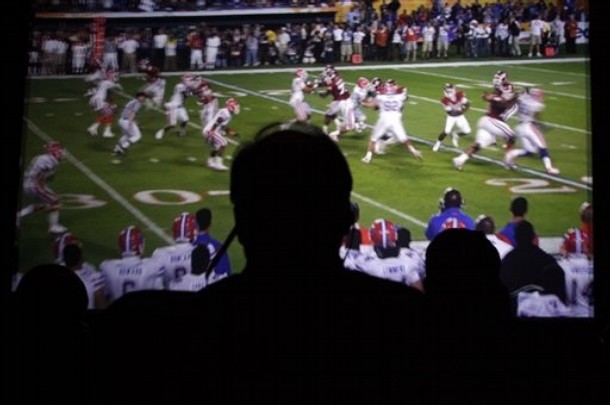
The football stadium is right across the street from my apartment. Close enough to throw a rock at. In fact, from my apartment, I could probably throw a pigskin clean over the stadium. The other day, my little brother Jackson, who’s twelve, was in town. He and I and my roommates were watching a football game at home on the big screen while it was going on live across the street. There was a major fumble in our team’s favor, and we suddenly realized that a moment before we’d heard cheering from the stadium. Two minutes later when we heard cheering again from outside the window, we perked up and watched the play on the edges of our seats. Sure enough, we watched the gutsy second-string QB run a touchdown. It made me wonder what it would be like to get five-second prophesies in other parts of life.

After that, the game went downhill. Our team made some major blunders and fell further and further behind. It was so bad that I gave up hope by about half time. But Jackson kept his hope till the end, really, right until the last few plays. He finally threw up his hands: “Dang, there’s no way we can come back now.” As it turned out, my pessimism had been right all along. Yet I could help but wish I’d had his optimism. He saw a different game than me.

Last night Jackson and I were chatting on the phone, and he was telling me about a movie he’d just seen. “And I hated the ending because once he—”

“Wait! Don’t ruin the ending.”

“Oh. Okay. Sorry. Well, basically after he becomes king, he doesn’t feel good about it, and then they kill him.”

How was that not ruining the ending? He must have thought I meant the details of the ending. Not the concept. Thanks for not ruining the details. I laughed about it on the inside. And it reminded me of how I didn’t understand a lot of things when I was a kid. (At twenty-eight though, I can’t understand why that date I had a few weeks ago had to be so horrible, although I guess I’m mostly over it now—so maybe understanding comes at increasing speeds the older you get.)


I imagine life as a graph, the x-axis being time: As you progress from being zero to being 8 years old, the line on the graph rises, showing how much smarter you’ve become. Actually, not smarter; the y-axis is understanding. Your understanding increases over time. Now watch it continue to rise as you get to 18, and then 28. Maybe this is the wrong metaphor; not a graph, a mountain, and as you scale the mountain, the higher you get, the more you see—the greater your understanding. Of course, like walking blind, you never know what’s really ahead of you. You can imagine it, but you have no real understanding until you get there (that’s when your eyes are open—but your eyes are only ever open looking to the past).

When I was 8, I assumed that understanding plateaued around 18 or 19. So I was surprised later when I looked back on 19 and realized how much I’d learned since. Now at 28, I understand a lot more than I did at 19. And yet now I can’t help but think that I’ll plateau around 38 or so. That’s just a gut feeling, and, logically, I realize I’ll probably be surprised again once I get there—but it’s hard to imagine specifically what I’ll see and what I’ll realize from that perspective. Tearing my ACL taught me a thing or two about hope. And I think I never could have understood it by speculating. It was understanding that comes only through experience. It’s the same with the $5,000 I lost in Chile, or the being single for much, much longer than I had planned. Hard lessons to learn, but you reach a scenic overlook by paying the price.

When I look at the things I wrote as a freshman, it seems my brain must have only been running at half speed. I wonder, if someone had told me, “Your brain is only half on,” would I have believed them? Probably not. (The reason I wonder is because I was considering telling this to my freshman writing students—that they shouldn’t worry too much about their scores because their brains are only half on. I suspect they wouldn’t get it.)


They’ll understand twice as much when they’re my age, and when they’re 38 they’ll probably think 28 was pretty naive too. Which makes me wonder—what if this mountain never had a farther side? What if you knew more at 88 years, and more still at 108, and more still at 208, higher and higher, for several lifetimes? —and what if it continued forever?

Here’s another metaphor (it’s how I understand things). Say, for example, that you put your laptop on the dimmest setting. If you have sunlight coming in the room, and especially if you’re outside, the screen will be too dim to see. But use that same setting while lying in bed with the lights out after midnight, and the dimmest setting is too bright, and you wish you could somehow make it dimmer. The dimness of the dark room compared to the room in daylight, and then the direct sun outdoors—you can see the scale increasing between each of these. I try to think of something beyond the brightness of the sun—but I can’t. I understand the concept of an increasing value, but to actually picture the value in your head—I can’t do it.

Nor can I imagine what it’s like to be 38. I understand the pattern, so I know conceptually what to expect. But I can’t imagine the details—because how can you understand something you don’t yet understand? How can you stand on a mountain ridge that’s two miles up and from there see what it’s like from ten miles up?

In high school, I was constantly anxious. But looking back, I can hardly imagine why. I wish someone would have told me to relax. Maybe they did, and I didn’t hear because I couldn’t understand.

Really, you can’t know something until it’s in your past. Right? If someone higher on the mountain gives you a call and explains what you’re going to see up ahead, you nod your head, and you imagine it, but it’s like imagining the parking lot stretched in front of you: You’re bound to imagine things wrong—disproportionate at the very least.

One of my main goals as a writer is to communicate my understanding into the head of the reader—essentially to put a thought into someone else’s brain. I think I believe that’s possible. Or I thought it was. But somehow my writing this is convincing me otherwise. Maybe I just believe that in writing I can approximate. I take the thought and put it inside your head, and once it’s there it looks a little like the thought that was in my head—there’s some resemblance. It’s a distant cousin, maybe. Anyways, they both have eyes and ears.

Reader, imagine the writer shaking his head.


A lot of writers think there’s strength in understatement—that you don’t want to insult your reader by telling it all. But part of me thinks they’re saying there’s an advantage to having people not understand, which I don’t buy. If it’s not crystal clear, it’s not good writing. (Which I suppose means I’ve never actually read good writing. But I’ve read some approximations—distant cousins of good writing. They were all written by mortals—is the problem.)

I once wrote a poem called “Traverse” that went like this:
Today, as the world completed
a revolution, I traveled from
summer into winter, from
the eye of Polaris to
the watch of Chiron.
It was one of my first poems (not that I’ve improved since). I always thought it had a lot of meaning packed into it, but chances are you didn’t really get any of it, that is, you didn’t understand—and not through any fault of your own: It’s vague. No two ways about it. But if I explained it to you, it would make more sense (and lose some of its depth?).

When I was a kid, I’d wonder why I was named Travis. I’d ask my mom, and she’d say she liked the name, and then I’d ask her if there was anyone famous I was named after, and she’d say, “Well, there was Colonel Travis of the Alamo...” (suddenly I recall my old roommate Dan shouting “Remember the Alamo!” while dancing down the hallway in his underwear), but she’d say this with uncertainty—I’m sure that’s not where she got it, but she didn’t seem to know where she did get it. I finally looked it up when I was about 14. It came from Old French, meant “from the crossroads,” and may have referred to toll collectors, which I wasn’t too proud of. That bothered me for several years, until I looked it up again; this time it said it had the same root as traverse, which I liked. I’ve since been to 10 countries outside the USA—which seems like a lot to me (though it’s certainly not enough). So the poem’s title referenced how I found identity in my name—by becoming a traveler.

I composed this “Traverse” on a flight that took me across the equator down to Santiago, Chile—literally, from summer into winter. Chiron is a constellation at the southern celestial pole, whose feet make up the Southern Cross—one of the few constellations that never rotates into the view of the northerners. (Seeing the Southern Cross had been on my bucket list. Alone (except for the stray dogs) on a steep street in Viña del Mar, I came to a corner where the lamp had gone out, and the street was especially dark—just me and the faint sound of glass tinkling in a nearby kitchen. I took a grainy photo of the Cross, and if I point to it in the picture it’s not too hard to identify. Next I want to see the northern lights.)

A poet came here to Brigham Young University for a reading early this semester. Before each poem, he’d talk about how his dad died, or what it was like to be an Asian American trying to reconnect with his fading heritage—things like that. With those preludes, the poems came alive. Without them, well, I for one wouldn’t have gotten much out of it (but I’ve already admitted my weakness in poetry).

Communication is a general problem though, something every person I’ve ever met also struggles with. It’s not easy to be clear, not easy to share understanding. Take this essay for example. You still don’t know what I’m driving at. Well, neither do I, so you’re following well.


I was sitting in class the other day, and I heard a key scraping in the lock of our classroom door (of course, it wasn’t locked). The door cracked open, halted, and shut again—apparently the classroom full of people was a surprise. We had been in the room the whole time, but the person didn’t know—couldn’t see past the barrier till he’d gone past it.

There’s a window above the door, and from inside the classroom you can see the gray ceiling tiles in the hall. The two spaces are right next to each other—illuminated by the same light even—part of the same continuum. Only when you’re standing on the ground, you can’t see that continuum, because the wooden door is in the way. They aren’t really separate, but they seem separate.

This is just another metaphor (I’ve used a lot in here). I’m guessing one of them will stick in your mind and the rest will fade like the vanishing dot on a CRT screen.

Click.

Gone.

I wish I could write the essay after you reacted to it. We’re doing this in the wrong order, aren’t we? Like we do most things in life. If only I could see through the barrier before I opened it. If only I could act after already having understood—perhaps that’s what it’s like to be God—rather than understanding only because I have acted.

But we’re stuck inside the space-time continuum.


In high school, I heard the term renaissance man, and it was always said as a joke. I looked it up once, but the definition didn’t click (maybe because I never got the joke—some pop-culture reference maybe). I became “familiar” with the term, but, because I didn’t understand, I just imagined some funny old man, maybe someone who was a kidder. Now I finally get what it means, and it’s a concept I love—that a person can understand not just one thing really well, but many things—that he can increase his understanding continually.

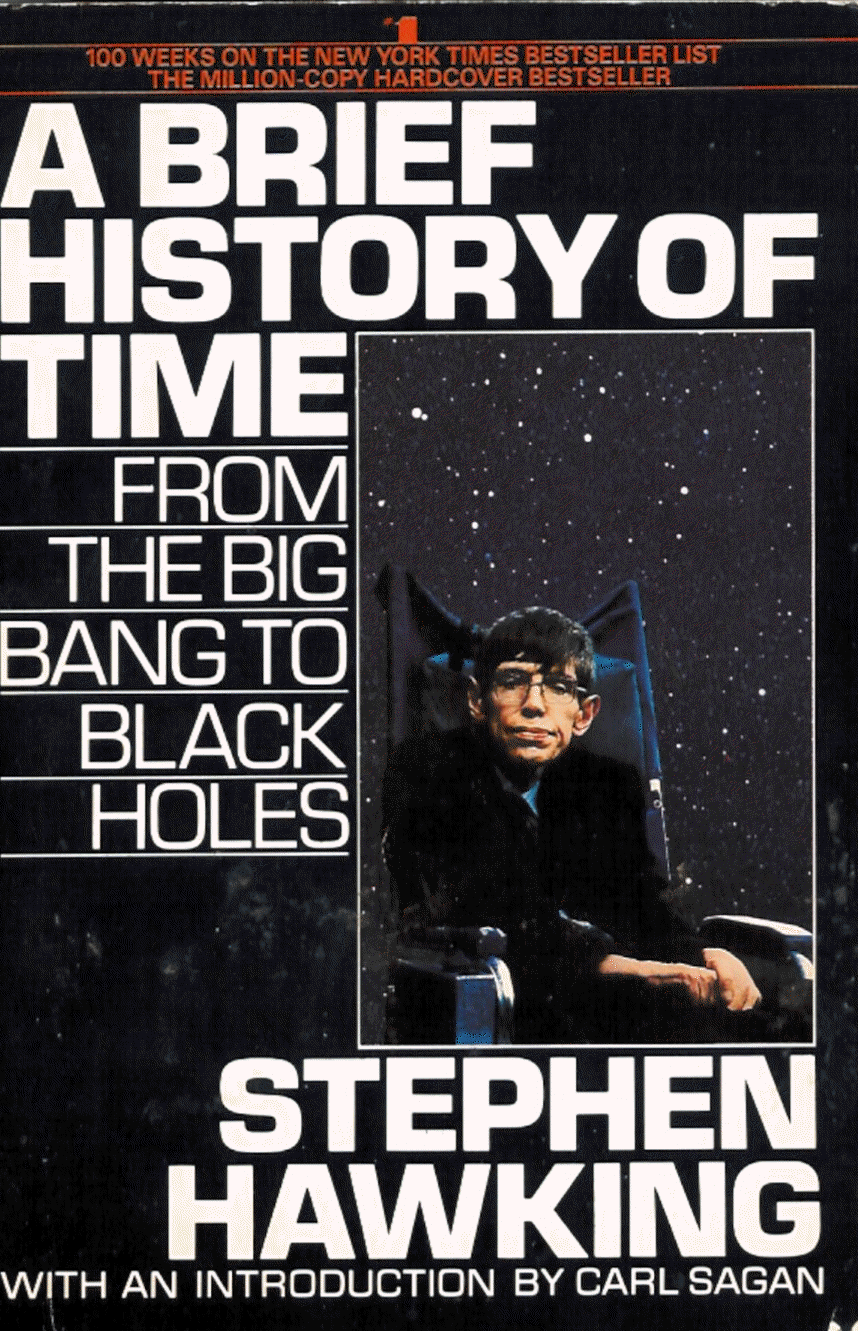
I want to become one, so I’ve been reading Stephen Hawking’s A Brief History of Time. (I’m really reading it because it’s fascinating, but if I can become a renaissance man while I’m at it, all the better. Luckily there are a lot of things that strike me as interesting. Susan Sontag said, “My idea of a writer: someone interested in everything.” So maybe I’m just striving to become a writer.)

A singularity is when a mass of particles collapse until the volume is zero, which increases both the density and temperature to infinity and bends the space-time continuum infinitely too. (In astronomy textbooks they show those maps of how a planet bends space time: like a heavy bowling ball at the center of a trampoline, and gravity is that slope in space-time that pulls on nearby objects and makes them roll in toward it. Incidentally, I imagine a black hole—a singularity—also pulls the trampoline down in a sort of curving V-shape, but then it cuts a hole in the fabric, so stuff just drops out the bottom into infinity, or into the gravel below the trampoline, depending on how you imagine it.)

Sometimes his book is over my head. And yet, the more I learn from it, the more I understand other things I thought I already understood but apparently didn’t. For example, thinking about singularities—infinity multiplying by infinity and causing the rules of relativity to break down—blows my mind! Confronting this conceptual infinity, this unfathomable, perhaps paradoxical idea, made me think that maybe God is behind the singularity, this crossroads of infinities. Or maybe God is the singularity. (Who knows. I do believe he is unity, at least.)


I had this argument with a girl I was dating, Meagan, about whether Avatar was a good movie or not. (Just so you know, Meagan, I’ve relaxed my criticism a bit, and I think I can enjoy it as a lighthearted adventure.) I had it in my head that I was absolutely right in my opinion—that my understanding really was the right way to see things. And I was right. Sort of.

My mom’s apple pie is the best dessert on earth—I’ll say so till the day I die. There’s no need to argue; it’s just the truth of the matter. (And it always bothered me when my siblings would argue the matter.)

Well, Meagan helped me to realize that I was leaving something out of my rock-solid equations of truth. Here was my equation:
Best Dessert Ever = Apple Pie
But it was bad science, a poorly constructed formula. Here’s how I revised it:
Best Dessert Ever + Trav’s Tastebuds → Apple Pie
And as many times as you try this second formula, you’ll get the same results. This is rock-bottom truth. It’s not opinion—not something that wavers. Yet, when you leave the Trav’s Tastebuds factor out, you can get all sorts of unreliable results. That’s why you have crazy people who claim chocolate cheesecake is the best dessert ever (which, ironically is close to the right answer in some ways).

I’m a passionate theist, passionate about a lot of other things too. And I get kind of ticked (a flaw, I admit) when people act like “the best way” isn’t even a possibility, as if subjectivity (which I believe is a true and important principle, as we learned in the Tastebud Theorem) has canceled out truth through relativity (which I don’t believe is true—but I’m talking about moral relativism, not Einstein).

There’s truth out there. Economic truth. Truth about the best way to fuel your body. Truth about the best way to refuel your Zippo (my little brother taught me this truth). All these areas of understanding are part of what’s true. I guess you could say that that’s my religion—to believe in everything that’s true. I believe that 2+2=4 is as true as “Love your enemies.” Of course, some of these truths—like Zippos and saturated fats—aren’t as weighty as other truths—like singularity and atonement. They’re less in glory. But they’re not any less true. (I may have just wandered into the darkness of philosophy that’s beyond my understanding.)

I don’t know all the truth, and a lot of things I thought were true I realized later weren’t true at all. But shouldn’t we be striving to figure things out? Shouldn’t we be trying to understand as much as we can?


Twice now Stephen Hawking has mentioned that he was invited to a conference at the Vatican to discuss Big Bang theory, and, while he was there, the Pope congratulated the scientists for the work they’d done. But then he asked them not to search beyond the Big Bang for whatever happened before, as it was the realm of God’s creation—it was God’s turf and man shouldn’t go poking his nose around. This frustrated me a great deal. I’m a Christian, and I find, like the Pope, that modern science confirms the greatness of God. But if God is real, then wouldn’t whatever scientists find next also confirm his greatness? I wish I could explain this to the Pope.

On the other hand, I’m not so sure I could make Stephen Hawking understand what I know about Christianity—that a man who was unjustly executed in Jerusalem was really half-god. Stephen has mentioned God a few times, and he seems to have a healthy agnostic view (which I think is pretty sensible—in fact, under different circumstances, I’d feel the same way. See, I respect agnostics, as they are, after all, right—there is no empirical data that proves the existence of God. On the other hand, the lack of evidence doesn’t prove there is no God. You’ve heard of the black swan fallacy, right?) And yet, I feel almost certain that he would never believe my religious beliefs, no matter how hard I tried explaining.

In my mind, Stephen lacks imagination: He focuses too much on what we know—what we understand—and focuses too little on those things we don’t understand, which is weird, because I know he knows the ratio of what we know to what we don’t know is ridiculously lopsided (for example, 73% of the universe is made up of dark energy, which remains mysterious for the most part). Of course, this is a child (child—at least as far as understanding cosmology goes) speaking to an adult (Stephen). And, as usual, the child’s imagination is greater. The child hasn’t opened his eyes yet, so he has to imagine everything—like walking blind through a parking lot.

This brings me to a thought I hadn’t considered. Is there value in the naivete of a child—value in not understanding and so imagining instead?

And if there is, is it worth giving up understanding in order to have imagination?—because it can’t be both ways. You either stay in Neverland, or you come home to Mrs. Darling. But you can’t have both. That’s what Peter never understood.

There’s a scene in A Christmas Carol where Scrooge and the first ghost see the woman Scrooge might have married but did not, and the narrator becomes fixed on the beauty of her daughter who also may have been Scrooge’s but was not:
“Yet I should have dearly liked, I own, to have touched her lips; to have questioned her, that she might have opened them; to have looked upon the lashes of her downcast eyes, and never raised a blush; to have let loose waves of hair, an inch of which would be a keepsake beyond price:”
And then the narrator says,
“In short, I should have liked, I do confess, to have had the lightest license of a child, and yet to have been man enough to know its value.”


There’s a person sitting in front of me. She has arms and legs, a torso and long hair, and, most importantly, eyes. What I don’t see is that there’s another level below (just like Inception). (But not below, and not beneath, nor under, nor inside. I don’t know the word I’m looking for. I guess I’ll have to use below because I don’t know the preposition for when you zoom in to smaller and smaller particles.)

The parts I can see are made up of smaller cells that I can’t see—keratin and other proteins (though I know basically nothing about biology). But what if I could see them? And understand them?

And there’s more, below that—molecules made up of hydrogen and oxygen. And below that, protons and electrons, spinning around in almost infinite empty space. And below that, quarks and neutrinos and positrons. All of these smaller organisms and (solar) systems, spinning around in their ordered patterns, stacked up one level on another to create the miracle of a human—of a being. And some people (like me) believe that there’s a soul in there too, though I don’t know which level it’s on, or under, or through, or around. But what if there was a mind that could perceive all those levels—to comprehend them and understand them all at once?


I’ve written a lot, and I’m certainly not certain as to whether I’ve made any sense, even to myself. I still don’t know what’s going to happen next. I still don’t know whether I’m about to crash into a parked car. Nor do I know if I’ll turn into a decent writer.

11 December 2011

Atypicalgojiday (nonfiction)


I was disoriented. There was no reason for it to make THAT NOISE, tapping a loud rhythm with syncopated beats:

Chuk, chucka CHUCK, chucka CHUCK.

And then the fake guitar slid in alongside the percussion, and SO LOUD! IT WAS GOING TO WAKE UP SAM! I leaned forward and picked it up, then dropped it, then picked it up. I slid my finger across the screen.

It stopped.

The morning light squeezed in through the blinds, and I squinted. I knew I had to get up for something, or at least I had thought so the night before—or I wouldn’t have set my alarm—but I couldn’t, for the life of me, remember what it was (or what I had been doing the night before, for that matter).

I stumbled out of bed.

The shower head stuck out from a black hole in the yellow fiberglass wall, a hole that was at least twice as big as it needed to be. A metal ring fit snugly around the pipe and then spread out to cover the hole, giving the appearance of a finished product. But this ring wasn’t fastened to the wall or the shower head. It just sat there on the pipe, which was flat and stuck straight out for the first inch and a half, and then it sloped downward toward the spout, where the whole fixture got wider and sprayed a shotgun spread of hot water.

Like every morning, a tarantula, who lived behind the fiberglass wall, pushed on the metal ring. It slid past the inch and a half of flat pipe, down the sloped part, clinked against the shower head, and stopped.

It sent a chill up my spine.

I turned and looked at the gaping hole. It was dark inside, and the tarantula had already pulled his leg back out of sight. I pushed the ring back into its spot, covering the hole. The chill creeped down my fingertips and into my spine again. Suddenly the world was crystal clear—Oh, yes; today is the last day of my fiction class. The semester of doom is finally coming to a close, and here we are—Shelob, you and me—at the end of all things.

I dressed, grabbed the purple jug of Goji juice from the fridge, and headed out the door with my long wool coat and plaid scarf.

The class sat around a long white-oak conference table, which was covered with all sorts of edibles: cinnamon rolls, pumpkin muffins, cake balls, krispy kremes, hot wassail, and a lot more. I loaded up one of each thing, and, as I ate, the sugar pounded me back into disorientation.

“Who brought the Goji juice?” This was the professor who had rejected my application to the MFA program—“We regret to inform you... Sincerely, Professor Tuttle.” Yet now, eight months later, I was in his fiction class, an MA student masquerading as a creative writer. This was the last day of a cautious semester, in which I had been constantly intimidated (though I’d relaxed ever so slightly because of his frequent witticisms).

“Mine,” and I boldly raised my hand from my chair midway down the conference table—not too close and not too far, as usual.

“Can I just tell you this without you getting offended?”

“Yes,” I nodded, though I didn’t really know the answer to his question.

“Goji juice tastes like the syrup of a melted popsicle.”

His comment wafted across the room, and settled on me. He meant it as a joke—one surely based on truth, as, they say, all jokes are. I don’t think I felt offense. It might have been shame. Or embarrassment. Sometimes those two are hard to distinguish. I felt like a loser; that was easy enough to tell. And I felt stupid for feeling that way too—for not just mentally letting it slide.

“Would you not be offended if I said I liked melted popsicle juice?” asked Whitney, and everyone laughed. And, luckily, the conversation continued around my swirling head, and I looked at each person in the room to make sure they weren’t looking at the me—at the boy who couldn’t get into the writing program and who also couldn’t pick a decent juice from the store shelves.

Next we critiqued Steve Haney’s (one of my peers’) “An Absent Father,” a 7-page piece about a little girl who couldn’t hear or see her own father—even when they were standing next to each other, and even though she could hear and see everyone else just fine. I didn’t make any comments. Steve, in my opinion, was Professor Tuttle’s most loyal follower and was also, incidentally, the best writer among us.

There was a lull in the conversation, and Steve graciously stood up with his red plastic cup. I’m not sure who in the room noticed, but he selected the Goji juice and poured himself a drink. He sat back down and took a sip. I glanced at him, then away, then back at him, then away. I could see no apparent reaction—neither of disgust or of pleasure.

He set the cup down on the table.

My heart sunk.

He was pretending it wasn’t disgusting.

Truth is, it was always hard to critique Steve’s nearly flawless stories. You could tell he’d already done several drafts, with huge, slashing revisions (unlike the rest of us, who struggled to complete even one draft in time). I did have one small comment though: My problem with his story was that he didn’t explain the rules of the “magical” element, and so as I read I was continually asking questions which his story never answered. But I didn’t say so out loud.

He reached for the red plastic cup and took another sip.

28 February 2011

Playground Threat


(An assignment from 617 Creative-Writing Theory and a look into the fictionality of creative nonfiction.)

He was a third-grader with a long green coat. He held a board that looked like it used to be a skateboard, only it was thicker. Maybe. And it was painted green. But it was splattered in all sort of other colors, blacks and reds and dark blues. I don’t know why it would have been painted like that. I saw him threatening another kid with it. I looked around for an adult. Someone who was bigger than this kid.

I don’t remember which side of the school it was on. In one memory, the older memory, it’s on the north-west corner of the school. But I have another more recent memory that puts it on the east side of the school, right next to the tether-ball poles. The more recent one is a stronger memory though. I know that.

I’d never seen a real person threaten someone before--just in movies. I guess I threatened my brothers. But not with a board. And even if I had, I wouldn’t have really done anything. But this kid looked like he might. I believed he would. I think this was the first time I realized that this is a mean world and there are people out there who will treat you like crap. For no reason. Or for no other reason than that they were treated like crap when they were in first grade.

I was walking toward him. He was between me and where I wanted to go. I think the bell had just rung, and I was walking toward the doors. Other kids were running in from the playgrounds too. But for some reason, he focused on me. Me, walking along the side of the school, the side of the school that was red brick, the red brick I’d ordinarily run my fingers down in the smooth grooves where the mortar was. But not this time.

It’s an interesting contrast. Me being innocent enough to walk right up to this kid, not realizing that he might actually follow through with his threat. The innocent, shy little blond, contrasted with the crazy kid, a third-grader probably, who was damaged enough to carry a board to school and raise it in the air and scowl at the first-graders.

I remember that red brick though. The color of blood, darker red, because it’s drying blood, because it’s been a while since you were gashed in the head with a painted board--or at least threatened with that possibility.

And I remember his green coat. A poofy down coat that seemed worn. And it seemed too big on him. Although it has started to look like a my little brother’s coat, with an orange lining around the inside of the collar. But it wasn’t that coat. It was an older, dingy coat. My brother’s coat wasn’t dingy. But the mean kid’s was.

I felt scared, but I was also innocent enough to keep walking toward the door. I had to go inside--the bell had rung. He lifted the board above one shoulder, and leaned forward, toward me. He clenched his teeth. I don’t remember that, specifically, but I’m sure he did. And there was this look in his eye. I remember that clearly. A real hatred. I don’t think he’d ever seen me before. But I guess he probably hated everyone. And there was another something in his eye. It was fear. He was holding that board up because he felt threatened. And that was the only way he knew to defend himself.

Who knows, maybe his dad carried a board around too.

18 August 2010

A Trip. To the Dentist. (nonfiction)

“Uh, J? We’re ready for you. You wanna follow me on back?”

I sat in the chair, which would have been comfortable if I were sitting back to relax. Only I was sitting back for a good conversation with someone’s hand inside my mouth. I tried to make conversation while I still could. I asked the nurse, “How was your weekend?” But she put this thingie over my nose—a white thingie with a white hose—so I’d inhale the gas from there—but my mouth was still free and easy, and I could breath the open air. That’s important for the story.

I don’t remember what kept it on. Maybe it was attached to my ears. And maybe I can’t remember now because I was already breathing it in. I’ve never been on the gas before, and I started to wonder. Wonder. Wuuunder. Does it make some people sick? “Well, some kids say they feel sick,” she said. “But who knows. It mostly just makes your hands feel droopy.” So I lifted up my hands and dropped them down on my lap. They felt droopy. Dr. Allen walked in, and I faked like I was wide awake. J, are you okay? Oh, yeah, I’m fine, Doc. Is the gas too strong? No, it’s good. How’s your iPad?

The needle was coming. That’s what the doctor does: he greets you and then shoves a needle in the roof of your mouth. Hi, how’s it going. Thhhhick. Right in there. I could feel it. Don’t worry. It’s just a little pinch, and I’ll ease it in real slow. And I could feel him easing it in. It was longer than the width of my face. The needle attached itself to my upper jaw on the right side. And it was pulling on the entire bone up there. Pulling. Ah. Pulling. And I looked at the mechanical arm—the one the light’s attached to—the light shines into your face. And it was pulling. And I had been breathing through my mouth so that I didn’t overdose on the gas thingie over my nose. And he’s pulling, and I breathe in deep, right through my nose. Right on through, because i need as much gas as I can get. And he’s like, we’re just going to move it just a titch. And I’m thinking, I don’t mind, doc. Just a titch. But don’t use words like that. And if I’m going to write this, how am I supposed to spell titch? I mean it rhymes with... that other word. You’re so vulgar when you’re looney. I blame him. And I could hear Michael Buble singing, i swear. And I think he was dancing. And doc’s like, is that the Zac Brown band? And I’m faking coherence, so I’m like, yeah, I think it is. And he says, they’ve had a lot of good songs lately. I bought one on my iPad. And I’m still stuck on Michael Buble from ten minutes ago. I really like that one. and i breath in through my nose. And i breath in through my nose. And i think, if you’re in a dream, it lasts longer. so if i suck in too much, this needle could be in my jaw for five minutes, which is one week in the dream world, and so i breath in through my nose, i mean my mouth, because i don’t want to go that deep under, because i don’t want this to last any longer than it has to. and it was at that moment that i realized my mouth was the size of a space station, and you could fly inside in little ships, but they were huge ships and it was a port with docking stations and blue fire burning out the back, and i could see the blinds reflected in the little light on the arm above my face shining right on it and the docs is like okay, now were going to fill the filling with just clean it with some diamond floss to get the edges off and i’m like doc you don’t have to waste youre diamond floss on me. that’s kind of ritzy don’t you think? and i noticed that the blinds weren’t the color of blinds. they were more of a rainbow color in the reflection because it’s a different kind of plastic. And I breath in through my mouth. And doc’s looking down at me. And he has this little zooming-in monocle on top of his right eye on his glasses. And I can tell they’re basically done. And I breath in through my mouth. And I’m still pretending like I’m fine, and I say, are you going to just switch it to oxygen?

And he all of a sudden he’s sitting right in front of me, like he was there the whole time.

“Yeah, the law requires at least five minutes on oxygen before you can drive.”

And I’m thinking, I’m glad you want to be on the safe side, Doc, because that laughing gas is some powerful stuff.

31 March 2010

dammit


i just paid my ticket. i hate those guys. hate the system.

06 March 2010

Blood (nonfiction)


Just past 7 am.

I walked out to my car and saw a streak of red in an arch across the driver door.

I used the squeegee from the gas station, and scrubbed. I dipped in the orange bucket, the water was black. And I scrubbed.

I saw the lady at the next pump. She looked at me. And for a second, I thought she knew. She knew I had murdered the old woman myself. Murdered her with the back of an ax.

The red disappeared from my car, but it dripped onto the pavement, not dissappearing at all. And when I touched the handle, it got on my hands, and I knew. I knew I could never escape. I had to turn myself in.

Okay. It was really just ketchup.

23 February 2010

Think Less or See More


I just saw one of my coworkers sitting on a bench in the lobby, staring toward the ground, but starting at nothing. I don't know him well, but he seems to be a smart man. As I walked by, this thought came to me: Depression is a function of the ratio of intellect to vision.

I've always liked the lyric, "I think I'm just scared. I think too much." When I have been depressed, I sometimes wished I could just stop thinking, because it was the thinking that was causing the depression.

An intellectual recognizes the dreariness and hopelessness in life. Some people do not have that sort of intellect. For example, there's a bum who commutes the opposite direction of me every morning. I see him in his blue hoodie and carhart coveralls. He holds both hands on the shopping cart, and limps along, one foot raised up behind him, his crutches tucked beneath the cart. Of course, I'm making some large assumptions, but I understand that there are lots of resources for a man like that to get back on his feet. Meagan tells me that if a person like that wants help, he can get it (especially in Salt Lake, so near the Church). But it's this lack of intellect (as I'm calling it) that keeps him from recognizing his situation as a problem. And, not seeing a problem, he has nothing to solve, and not much to get depressed about. (He always strikes me as being surprisingly content in his big fluffy beard.)

My other coworker makes another nice case study: He just turned 40. He recognizes that he's getting old--that his life is winding down--and this gets him down. Another man might approach that marker obliviously, proving the old adage that ignorance is bliss. Recognizing the problem puts my coworker at a disadvantage to the man who is oblivious. Unless--UNLESS--he lets this recognition move him to the next step...

Vision is the counterbalance to intellect. Intellect lets a man see his problems. Vision lets him react and overcome them. If the bum could see his situation as a problem, vision could then drive him to get help, and then a job and a roof. Intellect reminds the 40-year-old that life is short, but vision could drive him to spend his short lifetime changing the world, instead of playing World of Warcraft.

Again, depression is having an improper balance of intellect and vision.

The solution, then, is either to think less or see more.

(Better to be a happy lunatic than a sad genius. Better still to be a happy genius.)

06 December 2009

What Is the Right Path?


We're standing at one of life's crossroads with two paths before us. They both lead in good directions, but in different directions. Which job offer should I accept? Should I go back to school or keep working up through the company?

What is the right path?

This is often something we take to God with the hope that he will tell us which is right. And sometimes we don't seem to get an answer. I propose that this is because the path is not the preeminent element of the scene.

We often think of choices like tokens on a game board--move twelve spaces on this path and you'll end up here. This model causes us to think in terms of one choice being better than another because it gets us closer to some unknown goal.

Let's change the analogy a bit: Pretend we are sculptors. Our life choices are the choice between which type of clay to use for our sculpture--perhaps it's between stoneware and terra-cotta clays. Yes, they have different qualities--pros and cons--but both can be shaped into something good. Although the type of clay will effect the outcome, the type of sculptor will have a far greater effect on the result.

Now back to the topic at hand. If the Lord just gives you an easy answer, your choosing is removed and you're a passive sculptor--a lesser sculptor. But the Lords wants to make you into an active sculptor--a greater sculptor. Thus he lets you choose, and by choosing you become empowered. By choosing, you become a better, stronger person. You become a chooser who has more significance in the scene than the choices themselves.

So what is the right path?

You choosing is the right path.

05 December 2009

And Nothing But the Tooth


I chipped a tooth in my sleep last night. Bottom, back-left. You know how some of your molars have rising and falling ridges--like a miniature Wasatch front around the rim? One of the highest peaks is gone, which left a big hole--vacuity, the thesaurus says--and a rough edge, and my tongue keeps poking at it, almost like it's hoping it can wear it smooth. I hope so too.

This is a striking reminder of my mortality. That part of my tooth will never be there again.

This confirms that I'm grinding. My jaw has been very sore for the last three days. I've got to de-stress. I probably swallowed it.

25 November 2009

Focus. Slam!


Something weird happened at work today.

I've been a little worried about my inability to stay focused. The problem is that I have the whole internet just sitting right in front of me, taunting me.

I'll be going along, and then: Oh, I gotta email L. And then after a couple of minutes, T sends me a link to a Scooby Doo redo, and I follow the link. And one distraction always leads to another. It's terrible.

So one of these many distractions was an RSS feed that said Google was doing a conference on Chrome OS. I couldn't resist (you know me). So I put it up on my right monitor, and kept working on my spec on the left. Turns out that I didn't need to watch it, mostly just listen. So I'm listening, and working away. And before I knew it, two hours had gone by, and I hadn't left my InDesign screen once. Two hours of me staying on task. It was incredible.

The video conference was enough to keep my mind from wandering to other things. But it was undemanding enough that I was able to keep designing away. Hmm.

(Of course, this wouldn't work if I were writing--too much mental conflict. But designing is a different story.)

24 November 2009

Conceit


There was this new guy at church. I sat next to him, and struck up a conversation with him. That was way out of my comfort zone. (This was in my old ward.) I went to Salt Lake with him and a group for an event at the tabernacle, and chatted with him in the car. I was patting myself on the back for trying to befriend him.

My girlfriend invited him over for dinner. (She was the one who first invited him to church.) She told him I was coming, and he was like, "Who's that?"

I'm sure he'll recognize me. But the point is: I obviously wasn't as friendly as I thought.
* * *


Last night I had dinner at MacCool's with T. We ordered five half-price appetizers. Sometime in the conversation he mentioned his credit-card debt and his problem with overspending. When the waiter was getting the bill, I said, "Give me the three more-expensive ones." And T was like, "Let's just split it half way. It's not really worth bothering over a couple bucks."

I'm not as generous as I thought was either.
* * *


And another thing. I write on here with the whole world as my audience, and I act like I know something. But, jeez, what do I know? I'm just a punk kid.